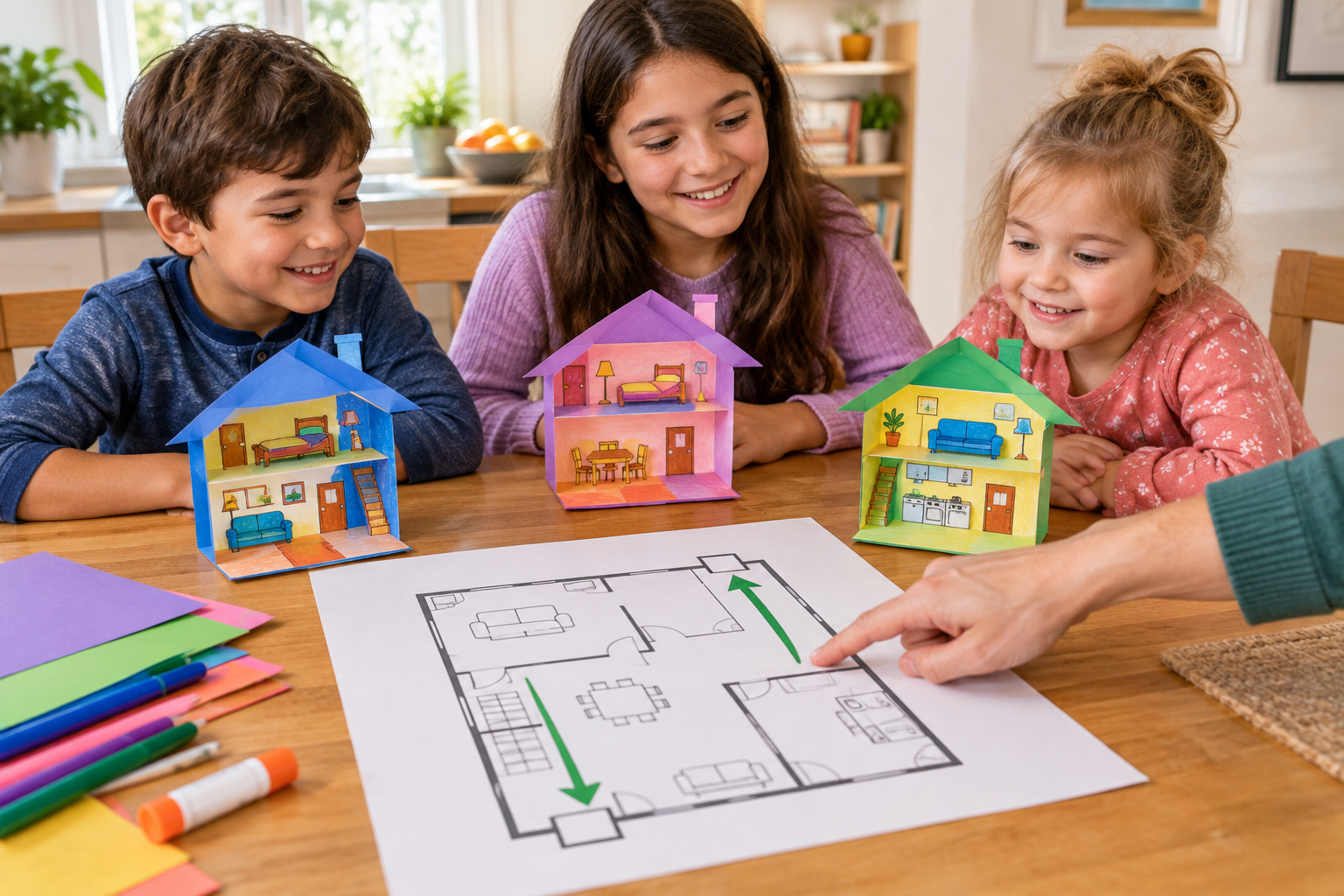
Helping children learn about fire safety is a crucial task for families and caregivers. Engaging kids in calm, indoor activities that emphasize important safety messages can build awareness and confidence without exposing them to any hazards. Social FD offers the “My Two-Ways-Out Pop-Up House” paper craft—a simple, family-friendly activity designed for children ages 4 to 10. This craft reinforces the vital fire safety message that every room must have two ways out, a fundamental guideline from the U.S. Fire Administration (USFA) and the National Fire Protection Association (NFPA).
Why Teach ‘Two Ways Out’?
The U.S. Fire Administration stresses that children should know two escape routes from every room to ensure safety if the primary exit is blocked by fire or smoke. Practicing this concept helps families prepare for emergencies and empowers children to feel more secure without using real fire or unsafe tools.
Age Range and Adult Supervision
This craft is appropriate for children between 4 and 10 years old. Adults must supervise all steps, perform any cutting for younger children (ages 4–6), and manage glue usage. Older children (ages 7–10) can use child-safe scissors under supervision and contribute to labeling and drawing simple floor plans. This approach follows guidance from the Consumer Product Safety Commission (CPSC), which recommends matching craft complexity and tools to children's abilities.
Supplies Needed (All Low-Risk)
- Heavy paper or light cardstock (8.5×11 inches)
- Child-safe scissors (pre-cut shapes recommended for younger children)
- Glue sticks or non-toxic child-safe white glue (avoid solvents)
- Colored pencils, crayons, or washable non-toxic markers
- Ruler and pencil (for adult use to score fold lines)
- Optional: age-appropriate stickers for windows and doors (avoid choking hazards for children under 3)
Important Safety Rules to Share Before Starting
- Never play with matches, lighters, candles, or any source of heat. Tell an adult if you find them. (USFA)
- Use only non-toxic, child-labeled craft supplies; if someone has asthma or allergies, pick unscented and low-dust materials. (CPSC)
- Do not use realistic pretend smoke alarms or fire extinguishers—this craft teaches what to do if an alarm sounds, not how to imitate it. (USFA)
- Keep small items like stickers and loose paper pieces away from children under 3. Check all age labels on supplies. (CPSC)
Step-by-Step Instructions (Adult Supervision Required)
- Adult: Fold one sheet of cardstock in half (book fold). This will be the base "room" for the pop-up house.
- Adult: Lightly sketch a simple house outline on the front, including roof and walls. Use a ruler and pencil to score a center vertical line that will fold to create the pop-up effect.
- Child: Color the outside of the house using crayons, markers, or colored pencils.
- Child: On a separate sheet, draw two exits—a door and a window. Color and label them “Exit 1” and “Exit 2” with adult help.
- Adult: Cut out the door and window shapes for younger children, attaching each to small folded tabs so they can pop up inside the house. Older children can cut with child-safe scissors themselves. Use only glue stick—avoid hot glue.
- Child and adult together: Place the pop-up house on a simple floor plan drawn on a separate sheet. Mark two escape paths—one through the door, one through the window or alternate door—with arrows or stickers. Discuss why having two ways out matters.
- Practice: Talk through scenarios (without pretending with fire or alarms). For example, ask “If smoke blocks the hallway, which exit would you use?” Stress staying low to avoid smoke, feeling doors with the back of the hand to check heat, and leaving quickly. (USFA)
- Finish: Take a photo of the pop-up house or display it on the refrigerator with a family note: “Two ways out from every room.” Use this as a reminder to review actual home escape plans and meeting points outside. (USFA Safety Toolkit)
Safety Lessons to Reinforce
- Teach children that every room should have two escape routes and a family meeting place outside.
Practice escape plans regularly so everyone feels prepared. (USFA, NFPA)
- Children should stay low if they smell smoke, feel doors with the back of the hand before opening, and never re-enter a burning building.
- Use only child-safe, non-toxic art materials. Avoid high-temperature adhesives or solvents to reduce risks of poisoning, inhalation, or burns. (CPSC)
- Check product labels for age-appropriateness and choking hazard warnings on craft supplies and toys. (CPSC)
- This craft educates but does not replace practicing real home fire drills using working smoke alarms so children recognize the real alarm sound. (USFA)
By completing the “My Two-Ways-Out Pop-Up House” craft together, families engage children in learning crucial fire safety skills in a safe, creative environment—reinforcing core messages that protect young lives nationwide. Keep practicing your home fire escape plan often to stay ready.
Social FD reminds you: A Simple Post Can Save A Life.
Sources
Sources