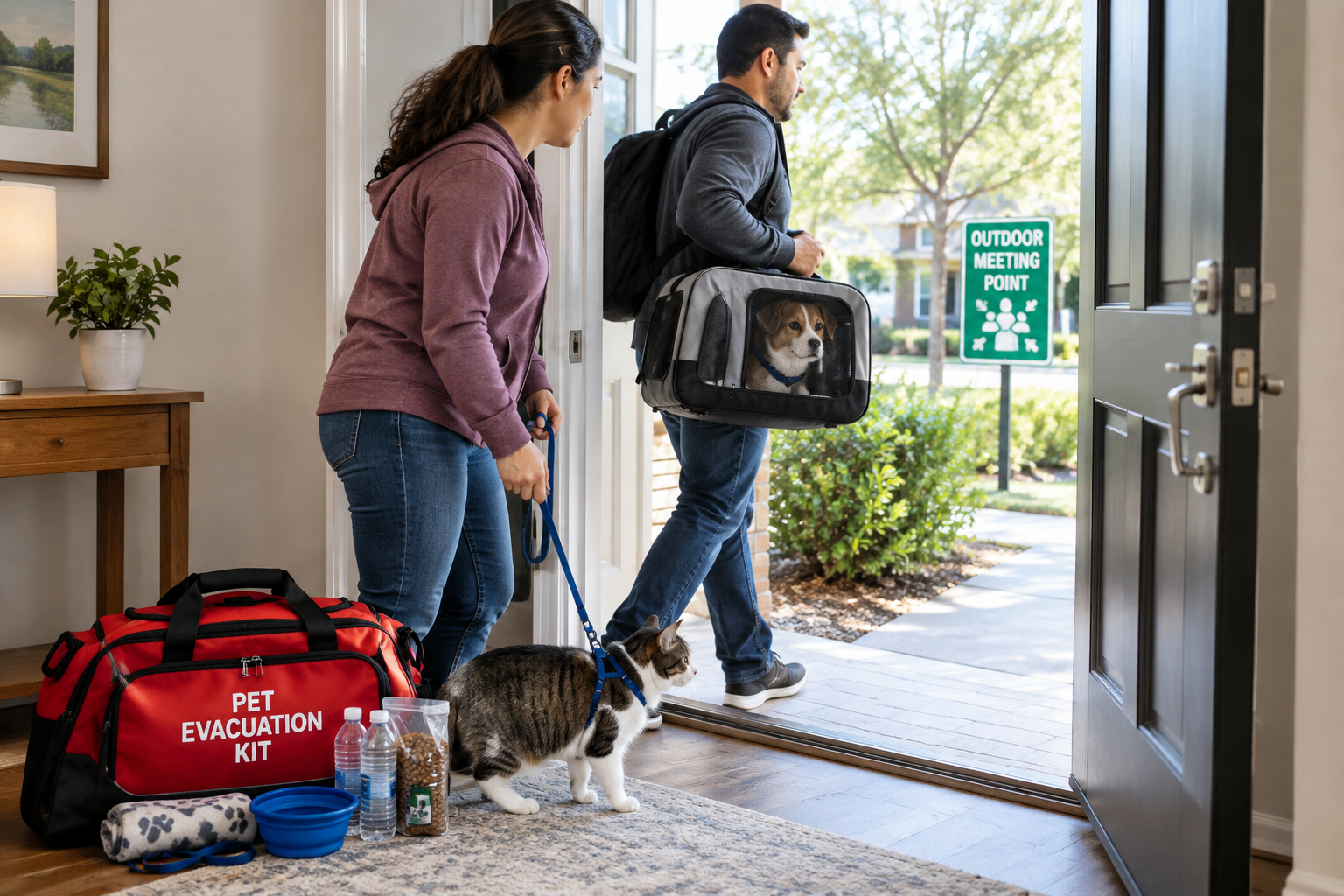
Including pets in your home fire escape plan is essential because you may have less than two minutes to evacuate once a smoke alarm sounds. The U.S. Fire Administration (USFA) highlights that swift, practiced action can save lives during a home fire, making it vital to plan for every family member — including your pets (USFA).
Grab-and-Go Pet Evacuation Kit Checklist
Preparing a ready-to-carry pet evacuation kit near your primary exit streamlines evacuation efforts. The American Red Cross recommends including:
- A sturdy leash, harness, or carrier suitable for each pet
- 3 to 7 days of pet food (rotate regularly) and bottled water
- Collapsible feeding and water bowls for ease of use
- Medications and copies of vaccination and medical records in a waterproof folder
- A recent photo of you with your pet to assist in identification and reunification
- Sanitation supplies such as litter, pans, or waste bags
- A basic pet first-aid kit for minor injuries or emergencies
Store this kit where it is quickly accessible when evacuating (Red Cross).
Step-By-Step Pet-Inclusive Escape Planning
Creating a coordinated plan includes more than just packing supplies. Key steps are:
- Identify two exits per room: Draw a home map with two ways out of every room and an outside meeting place. Make sure exits and windows are unobstructed.
- Assign pet roles: Clarify who is responsible for which pet(s) and where carriers or leashes are stored near each exit. This avoids confusion during a fast evacuation.
- Backup caregivers and neighbor buddies: Develop a buddy system with trusted neighbors or friends who can evacuate or care for your animals if you are away or incapacitated.
- Plans for large or hard-to-move animals: For horses or livestock, arrange trailer transport, boarding facilities, or refuges in advance. Coordinate with local animal response organizations if possible.
Planning prevents dangerous delays and improves chances of safely evacuating every animal
(USFA), (NFPA).
Practice Escape Plans Regularly
Regular drills strengthen everyone’s readiness. Practice:
- Exiting through all planned routes quickly and calmly
- Securing pets in carriers or leashes during calm periods so animals become familiar with the process
- Coordinating roles to move pets safely while prioritizing human safety
Never re-enter a building to rescue pets during an active fire. Instead, inform firefighters immediately about pets still inside
(USFA), (NFPA).
Recovery and Post-Fire Considerations
After evacuation, taking care of pets’ health and reunification needs is crucial.
- Observe pets for signs of smoke inhalation or injury, such as coughing, labored breathing, or disorientation.
- Seek veterinary care immediately if any symptoms appear.
- Use microchips, ID tags with reliable contacts, and keep physical and digital copies of medical and vaccination records to speed reunification if pets go missing.
- Access trustworthy post-fire pet resources like the American Red Cross Pet First Aid app for guidance, but do not substitute professional veterinary treatment.
These recovery steps support pets’ well-being after an emergency (Red Cross), (AVMA).
Important Safety Cautions
- Never re-enter a burning structure to retrieve pets. Always evacuate immediately and alert firefighters to pets inside.
- Do not administer sedatives or medications to pets without direct veterinary guidance, even during emergencies.
- Practice preparedness and safe evacuation to avoid last-minute dangerous decisions.
National guidance emphasizes these non-negotiable cautions for owner and animal safety (NFPA), (AVMA).
Social FD: A Simple Post Can Save A Life.
Sources