

Your community has a lot to hear from you.
Social FD helps eligible nonprofit volunteer fire departments with social media tools, safety content, and website support.
Request Free Department Support →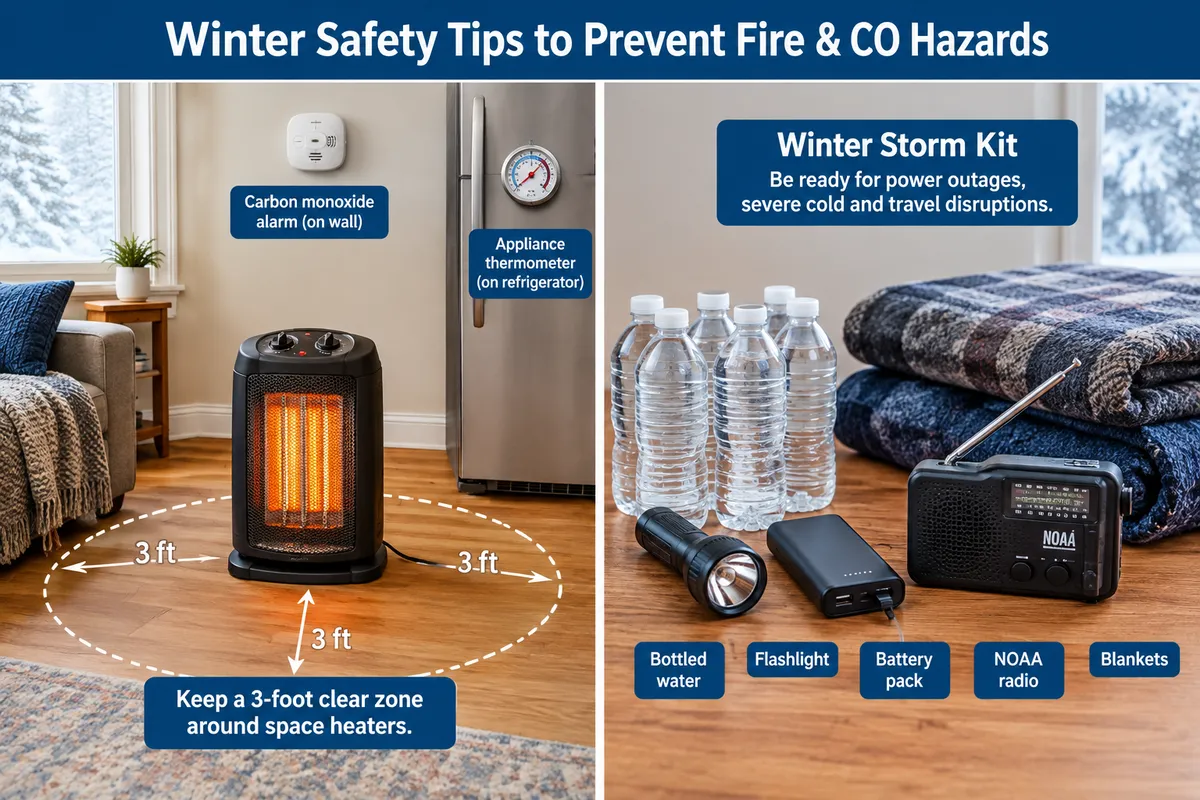
Winter brings increased risks of power outages and storms across the United States, which can lead to significant fire hazards, carbon monoxide (CO) poisoning, and medical emergencies. Social FD shares essential, nationwide guidance grounded in official sources to help households prepare safely for colder-season outages and winter storms.
Electrical power loss can happen anywhere during winter storms. Be sure to keep emergency lighting such as flashlights or headlamps, plus spare batteries, in an easily accessible location. A battery-powered or hand-crank NOAA weather radio ensures you receive critical weather updates even during extended outages. Have power banks and car chargers ready to keep essential devices, especially medical equipment, operational. Assembling a winter-ready kit with nonperishable food, water, blankets, a first-aid kit, and appliance thermometers for monitoring refrigerator and freezer temperatures is crucial to assessing food safety during outages (CDC, NWS).
If you rely on alternate heating during a power outage, keep three controls in mind simultaneously:
CO poisoning is a silent threat during winter heating or generator use. Install and test CO alarms on every home level and near sleeping areas, following manufacturer battery replacement schedules. Watch for symptoms like headache, nausea, dizziness, confusion, or drowsiness, and seek fresh air and immediate medical care if these occur. Avoid indoor use of portable fuel-burning heaters, grills, and camping stoves which have caused CO incidents (CDC, CPSC).
Space heaters contribute disproportionately to fatal home heating fires. Only use models tested by recognized labs, place them on flat, level surfaces, and plug directly into wall outlets—not power strips or extension cords for continuous use. Keep a 3-foot clearance around heaters free from combustibles. Turn heaters off when the room is unoccupied or when sleeping. Have furnaces, chimneys, and wood stoves inspected and cleaned by professionals annually. Dispose of fireplace ashes only after they have completely cooled, stored outdoors in a metal container away from buildings (USFA).
Place generators outdoors at least several feet from windows or vents. Use only heavy-duty outdoor-rated cords. Never connect a generator directly to home wiring without a transfer switch installed by a licensed electrician. Keep refrigerator and freezer doors closed during outages; a full freezer stays cold longer. Use appliance thermometers to monitor temperatures and discard perishable food held above 40°F too long. These steps help prevent foodborne illnesses after outages (Ready.gov, CDC).
Winter weather hazards vary regionally and can become life-threatening without proper preparation. Following these evidence-based tips grounded in CDC, USFA, NWS, CPSC, and Ready.gov guidance helps protect you and your family from fire, carbon monoxide, and health risks during power outages and winter storms. Always monitor trusted local National Weather Service alerts for developments and official instructions.
Social FD reminds you: A Simple Post Can Save A Life.
Social FD helps eligible nonprofit volunteer fire departments with social media tools, safety content, and website support.
Request Free Department Support →Visit our free fire safety guide for information you can share with your family and community.
Get the Free Fire Safety Guide →