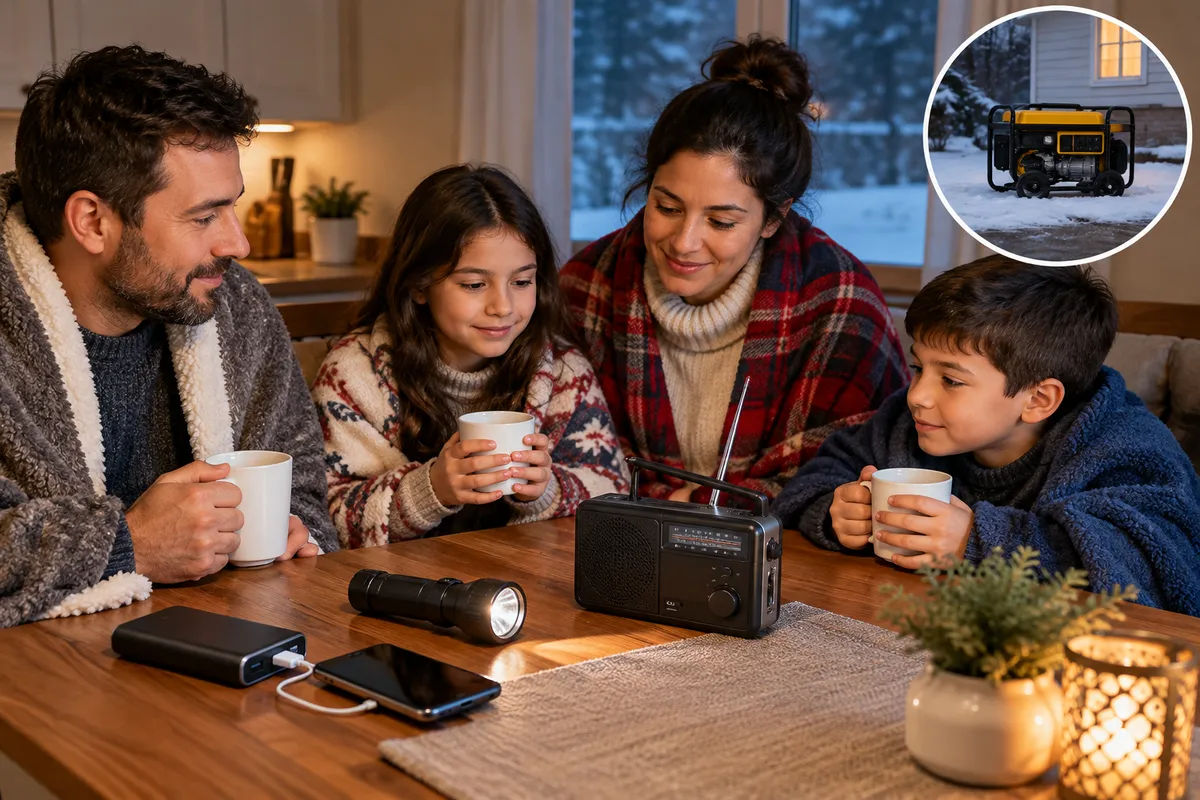
A family of four sitting together at a table in a warmly lit room during winter. They are dressed in cozy sweaters and blankets and holding mugs. On the table are a flashlight, a power bank charging a smartphone, and a battery-powered radio. Through the window, snow is visible outside. Inset shows a portable generator placed on snow outside a house.

Winter Power Outage Safety: Family Preparedness Tips

November 05, 2026•5 min read

As colder weather approaches across much of the United States, preparing your family for possible winter power outages is crucial. Power outages can disrupt heating systems, refrigeration, lighting, and communication, creating significant hazards during cold months. This guide offers practical steps families can take now to stay safe and comfortable during outages, emphasizing supply kit essentials, food and medication safety, safe backup power use, communication plans, and special considerations for vulnerable people and pets.

Build and Check Your Winter Power-Outage Kit

Having an accessible, well-stocked family emergency kit is a frontline step in outage preparedness. Key items to prioritize right now include:

  • A charged power bank and car charger for essential electronic devices like phones.
  • A battery-powered or hand-crank NOAA weather radio to receive emergency alerts when other systems fail.
  • Flashlights and extra batteries instead of candles to reduce fire risk.
  • Paper copies of household emergency contacts and planned meeting points.
  • Warm clothing, extra blankets, and emergency or space blankets to maintain body heat.
  • Appliance thermometers for your refrigerator and freezer to monitor temperatures during outages.
  • Any necessary medications, with special consideration for those requiring refrigeration. Discuss alternative plans with your healthcare provider to ensure continued management in a power failure.

These items help families maintain communication, warmth, and safety during outages (CDC, Red Cross).

Food and Medication Safety During Outages

Power outages can compromise refrigeration, heightening the risk of foodborne illness and medication spoilage:

  • Keep refrigerator and freezer doors closed to preserve cold temperatures. A full freezer will keep food safe for about 48 hours, while a refrigerator generally preserves food up to 4 hours if unopened.
  • Discard perishable foods that have been at or above 40°F for more than 4 hours or show unusual odor, color, or texture.
  • If your medications require refrigeration, follow label guidance carefully and consult your pharmacist or clinician if they have been stored above recommended temperatures.
  • Access safe drinking water through bottled, boiled, or treated sources, as local purification may be compromised during outages.

Consult authoritative resources for detailed food safety charts to decide when to discard or refreeze foods (Ready.gov, CDC).

Use Backup Power Safely to Avoid Carbon Monoxide Risks

Portable generators and fuel-burning appliances are common backup power sources, but must be used with great caution to prevent deadly carbon monoxide (CO) poisoning, an odorless and colorless gas that can cause illness or death without warning.

  • Always place portable generators outdoors and at least 20 feet away from windows, doors, and vents.
  • Never operate generators, grills, stoves, or charcoal indoors, including garages, basements, or enclosed spaces.
  • Use long extension cords rated for outdoor use to safely connect appliances.
  • Install and maintain battery-powered or battery-backup CO detectors near sleeping areas and test them regularly.
  • If considering a home-connected standby generator, hire a licensed electrician to install a transfer switch complying with local codes to prevent dangerous electrical backfeed.

Recognizing CO poisoning symptoms, such as headache, dizziness, nausea, or confusion, and calling emergency services immediately can save lives (CDC CO Guidance, Red Cross Generator Safety).

Communication and Household Planning

A proactive communication plan is essential during power outages, especially when cellular networks or internet services may fail:

  • Designate primary and secondary contacts within your household and an out-of-area person everyone can check in with by phone or text.
  • Keep paper copies of important phone numbers accessible.
  • Sign up for local emergency alerts through smartphone apps or NOAA weather radios.
  • Charge phones and power banks before forecasted outages.
  • Discuss and assign household roles so everyone knows what to do during an outage, including checking on neighbors, especially elderly or medically vulnerable ones.

These actions help maintain connectivity and organize responses in challenging conditions (Red Cross).

Winter-Specific Preparedness and Community Considerations

Cold temperatures compound risks during outages:

  • Have extra blankets, layered clothing, and warm coats ready.
  • Use fireplaces or portable heaters safely per manufacturer instructions and local codes.
  • Never use ovens or stoves as heating sources.
  • Check on neighbors, pets, and family members with special medical or mobility needs.
  • Seek community warming shelters if necessary.

Regional advice and resources may vary; always consult your local emergency management authorities and utility providers for location-specific guidance (Ready.gov Winter Storm Guidance, FEMA Emergency Preparedness).

Winter power outages present unique challenges, but with early planning and attention to safety details, families can reduce risk and maintain resilience. Charge your devices, assemble a reliable kit, monitor your food and medications carefully, use backup power only as recommended, and keep communication lines open. Remember, never run generators indoors and always install CO detectors. Check on your neighbors and pets, stay informed, and plan for warmth and safety.

Social FD Reminder: A simple post can save a life — share preparedness tips with your community today.

Sources

Back to Blog
For your department

Your community has a lot to hear from you.

Social FD helps eligible nonprofit volunteer fire departments with social media tools, safety content, and website support.

Request Free Department Support →
A resource to keep handy

Bring fire safety into everyday conversations.

Visit our free fire safety guide for information you can share with your family and community.

Get the Free Fire Safety Guide →