

Your community has a lot to hear from you.
Social FD helps eligible nonprofit volunteer fire departments with social media tools, safety content, and website support.
Request Free Department Support →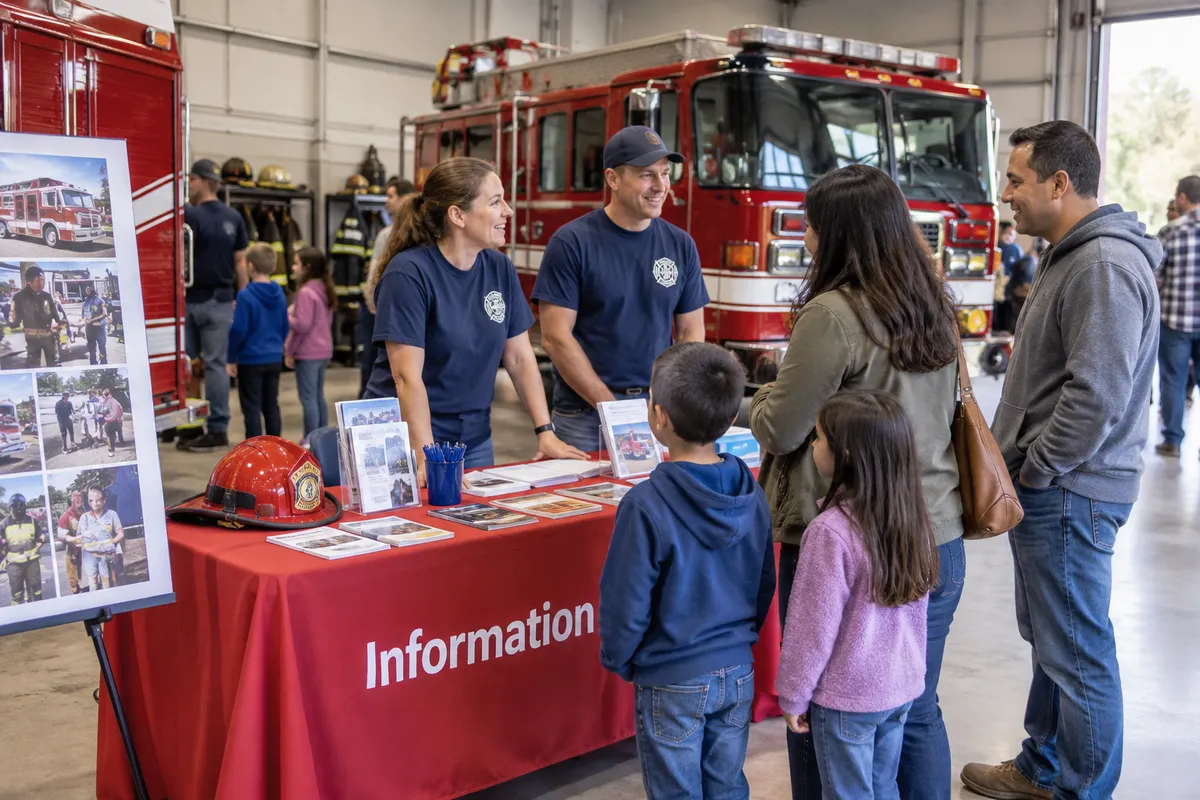
Cover image: AI-generated illustration, not a photograph of a specific department, incident, person, or authenticated artifact.
Volunteer fire departments play a vital role in communities across the United States — not only by responding to emergencies but also through a wide array of non-emergency activities that support safety, education, and outreach. For those who want to help but may not be looking to fight fires or provide medical response, many volunteer departments offer department-approved, safe ways to contribute behind the scenes. Understanding these opportunities and how to inquire safely ensures community members can support local services effectively and responsibly.
Volunteer fire departments rely heavily on community members to fill numerous roles beyond active incident response. These non-operational positions help departments run smoothly and enhance public safety while freeing up emergency responders to focus on calls. The National Volunteer Fire Council (NVFC) highlights several key non-emergency roles that frequently need volunteers:
These roles accommodate a wide range of skills and interests, making it possible for many community members to contribute meaningfully. Volunteer programs like NVFC's Fire Corps specifically organize such opportunities under local fire or EMS department leadership to ensure all efforts are coordinated and department-approved (see Fire Corps FAQ).
Several national resources help connect interested volunteers with appropriate local opportunities, providing tools, registration platforms, and outreach guides:
It is critical to follow safe, department-approved procedures when seeking to volunteer. Volunteers should never go to an emergency scene uninvited, as this can be dangerous and interfere with operations. Instead, use official channels to express interest and arrange involvement. Approved methods include:
Be wary of unofficial recruitment postings or social media ads that are not clearly endorsed by the local fire department or national organizations.
The NVFC offers guidance and resources for families supporting volunteer responders. Non-operational involvement by family members can strengthen community bonds and provide critical support services. The NVFC family resources include support guides, training modules, and leadership opportunities for youth through the National Junior Firefighter Program. These programs foster leadership, responsibility, and safety awareness.
Volunteer roles vary widely across departments. Operational firefighting roles often require formal training, certifications, and physical fitness standards. Non-operational positions generally involve local orientation and role-specific training tailored to the assigned tasks. Some departments provide benefits such as stipends, tuition assistance, or tax advantages, but these vary significantly by location and department policies.
Volunteers are encouraged to confirm all details with their local department since eligibility, duties, and program availability differ.
Community support of volunteer fire departments goes beyond emergency responses. By engaging in approved non-emergency roles, volunteers contribute to essential functions like public education, administration, fundraising, and support services. These efforts strengthen departments’ ability to protect lives and property while maintaining safety for both responders and the public.
Always follow official guidance, use secure contact methods, and never approach emergency scenes to provide unrequested assistance. For more information about opportunities and safe involvement, visit the National Volunteer Fire Council and USFA websites.
Ready to get started? Find your local department’s volunteer page or explore national programs to offer your skills safely and effectively.
Social FD reminds you: A Simple Post Can Save A Life.
Social FD helps eligible nonprofit volunteer fire departments with social media tools, safety content, and website support.
Request Free Department Support →Visit our free fire safety guide for information you can share with your family and community.
Get the Free Fire Safety Guide →